Recycling and Sustainability — Garden Clearance Thornton Heath
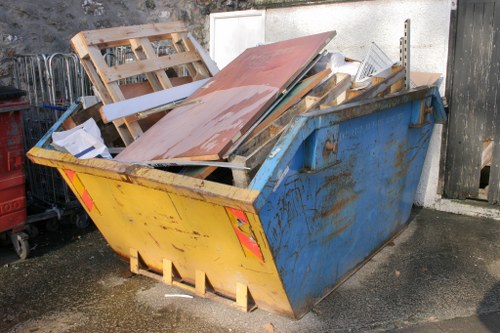 Garden Clearance Thornton Heath services are committed to creating an eco-conscious approach to clearing green spaces, lawns and patios across Thornton Heath and the wider Croydon area. Our page explains how a local sustainable rubbish area approach reduces landfill, supports charity reuse and aligns with the borough's waste separation policies. We work to turn cleared garden waste into useful resources rather than letting it become general waste.
We set an ambitious recycling percentage target for all gardens we clear: 70% reuse and recycling of materials from each clearance by 2028. That figure covers timber, soil and compostable vegetation, stone and paving suitable for reuse, metal garden furniture and electronics such as pond pumps. The target supports the borough’s wider aims and demonstrates how effective eco-friendly waste disposal area practices can be when they are coordinated and monitored.
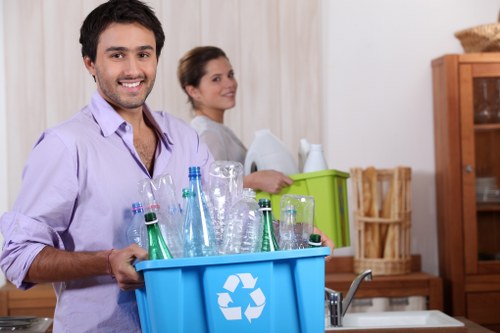 Our local approach reflects the patchwork of collection systems across south London boroughs: a mix of food waste caddies, mixed recycling crates and dedicated garden waste subscriptions. We liaise with Croydon-style transfer stations and community hubs so that cleared material follows the correct routes. By matching sorting at source to the boroughs' separation schemes, we reduce contamination and increase the value of recyclable loads.
Partnerships are central to making a sustainable rubbish area model work. We collaborate with local charities and reuse organisations to divert serviceable items from disposal. Instead of bulky items going to landfill, suitable garden furniture, planters and reclaimed stone are offered to charities and reuse networks that support local families and community projects. These collaborations turn practical recovery into social benefit.
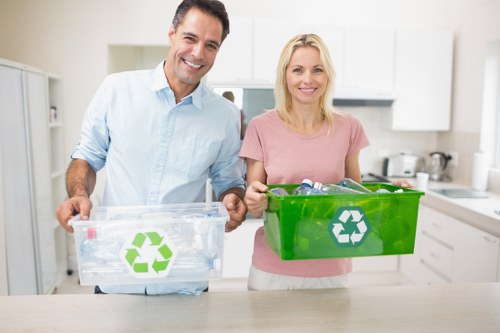 We also work with municipal transfer stations and recycling centres in and around Croydon and neighbouring boroughs. Local transfer stations act as consolidation points where green waste can be separated and routed for composting, mulch production or energy-from-waste processes. When garden soil and plant material are clean and free of contaminants, they are fastest to recycle into compost or mulching material for parks and community gardens.
To make the process transparent, we maintain records of material flows and provide a breakdown by category. Typical categories we track include:
- Green compostables: grass cuttings, prunings and diseased plants where safe.
- Hard landscaping: reclaimed paving, bricks and stone for reuse.
- Metals and fixtures: sheds, gates and metal frames sent for specialist recycling.
- Hazardous items: treated timbers, certain paints or oils that require careful disposal.
Our fleet reflects our environmental commitments. We operate low-carbon vans, including electric and plug-in hybrid vehicles for short urban trips, combined with fuel-efficient Euro 6 vehicles for longer transfers. Using low-emission transport reduces local pollution in Thornton Heath streets and cuts the carbon footprint of every garden clearance. Routes are optimised to minimise mileage and maximise load consolidation—two small changes that add up to a measurable carbon saving.
We actively support community reuse through formal partnerships with local charities, social enterprises and redistribution networks. These partnerships let us donate or sell on items in good condition, from composters and planters to bench seating and reclaimed stone, giving them a second life in community gardens, allotments and charity projects. Working together with the local voluntary sector reinforces a circular approach to materials.
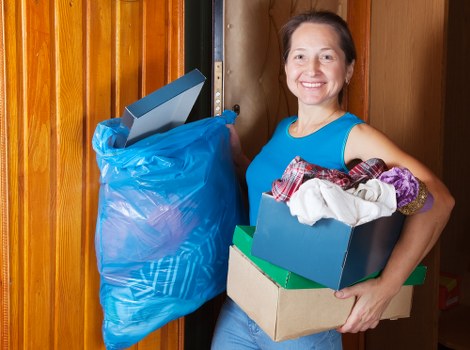 Beyond direct reuse, we engage with local recycling infrastructure. The borough’s approach to waste separation—separating food waste, mixed recycling and garden waste—means that materials are already primed for targeted processing. By sorting at the point of clearance and using a nearby transfer station, we reduce cross-contamination and help increase the municipal recycling yield.
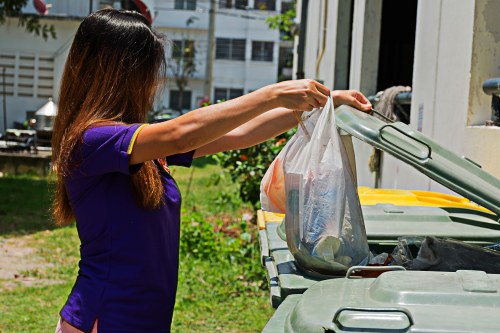
Local Transfer Stations and Routes
Strategic links with transfer facilities and community recycling centres allow us to channel materials efficiently. A clear route plan ensures that items destined for composting, material recovery or reuse are taken to the correct local facility rather than to general waste. This practical routing is a cornerstone of a true eco-friendly waste disposal area strategy.
Sustainable Targets and Community Impact
Our work to develop a reliable and measurable sustainable rubbish area model aims for more than compliance: it seeks positive change. We report annually on progress toward the recycling target, diversion from landfill and reductions in operational vehicle emissions. The goal is to demonstrate that local Garden Clearance in Thornton Heath can be both practical and planet-friendly while supporting local charities and community projects.Adopting these sustainable practices—source sorting, charity partnerships, transfer station use and low-emission transport—creates a resilient model for green-space clearance. It protects local green corridors, supports local reuse economies and helps the borough move toward higher recycling rates. Together, these steps make Garden Clearance Thornton Heath a practical example of how urban clearances can be part of the circular economy rather than a step toward disposal.