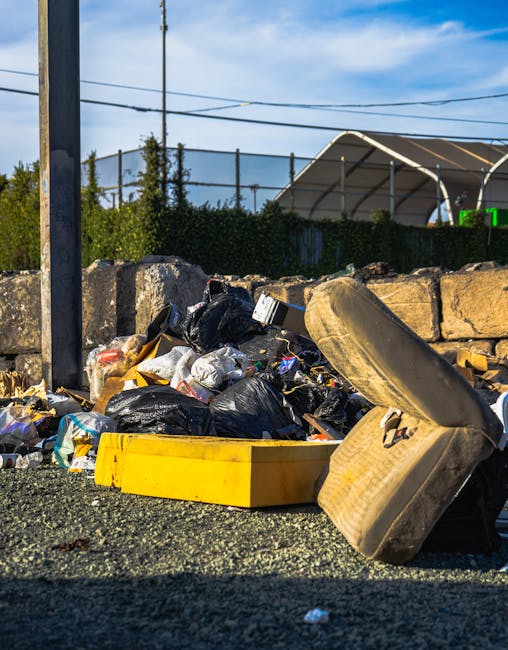
Croydon Council rules for bulky waste disposal in Thornton Heath: what residents need to know
If you are trying to clear an old mattress, a broken wardrobe, or a pile of mixed household items, the rules can feel oddly fiddly. Croydon Council rules for bulky waste disposal in Thornton Heath are meant to keep streets tidy, reduce fly-tipping, and make sure large items are handled safely. But in real life, people mainly want a simple answer: what can go, how should it be presented, and what is the cleanest way to get rid of it without making a mess of the kerbside?
This guide breaks the process down in plain English. You will get a practical overview of how bulky waste is normally managed in Thornton Heath, what tends to trip people up, and when it makes more sense to use a professional clearance service instead. We will keep it grounded, local, and useful. No waffle.
Why Croydon Council rules for bulky waste disposal in Thornton Heath Matters
Bulky waste is not the same as regular bin waste. A dining table, chest of drawers, sofa, carpet roll, or broken appliance takes up space quickly, and it usually needs special collection arrangements. That matters in Thornton Heath because local streets are busy, parking is tight, and a badly placed item on the pavement can cause nuisance within hours. To be fair, one chair left beside a front wall can turn into three bags, a lamp, and a mattress by the weekend.
Understanding the rules helps you avoid three common headaches: missed collections, avoidable extra costs, and enforcement issues if items are left out incorrectly. It also protects neighbours, because bulky waste in a shared street, block, or terrace can block access and create trip hazards. If you live in a flat, a converted house, or a property with limited frontage, the practical side matters even more.
There is another reason this topic matters. Not every item that looks like "rubbish" should be treated the same way. Some items contain reusable parts, some contain electrical components, and some need a cleaner, safer lifting plan than a standard bin day can offer. If you are clearing an entire room rather than one item, a broader home clearance service or house clearance service may be a better fit than trying to manage each piece separately.
Expert summary: The simplest way to stay on the right side of bulky waste rules is to identify the items clearly, separate anything hazardous or electrical, and choose a collection method that matches the size, access, and urgency of the job.
How Croydon Council rules for bulky waste disposal in Thornton Heath Works
The core idea is straightforward: bulky household items should be presented and collected in a way that does not obstruct public areas, create danger, or lead to waste being abandoned on the street. In practice, the process usually starts with identifying whether your item counts as bulky waste, then checking the collection method available to you, and finally preparing it for uplift. The details are where people get caught out.
Typical bulky waste includes furniture, mattresses, carpets, and larger household goods. Depending on the item, you may need to remove loose contents, separate components, or avoid mixing it with materials that require a different disposal route. A damp wardrobe with shelves still inside, for example, is awkward for a crew to move and can slow the whole collection down. That is the sort of small thing that becomes a big thing on collection day.
When people ask how this works in Thornton Heath specifically, the real answer is that you should follow the local collection conditions carefully and present items in an accessible way. That means not blocking parked cars, not leaving objects where pedestrians have to step into the road, and making sure the waste is ready when the collection window arrives. If your waste comes from a flat, loft, garage, or office space, internal lifting and carrying are part of the job too. In those situations, services such as flat clearance, garage clearance, or loft clearance may save you a lot of hassle.
One practical point many residents overlook: bulky waste collections are usually about presentation as much as disposal. If items are stacked badly, tied up poorly, or hidden behind bins and planters, collection crews may not treat them as ready for uplift. That can mean delays. Nobody wants to spend a week looking at a broken sofa by the gate, especially in wet weather.
What usually counts as bulky waste
- Sofas, armchairs, and dining chairs
- Tables, wardrobes, shelving, and cabinets
- Mattresses and bed frames
- Large rugs or carpets cut into manageable sections
- Some white goods and large household appliances, subject to the collection route
What usually needs special handling
- Electrical items with plugs, batteries, or screens
- Items with sharp metal edges or broken glass
- Paint tins, chemicals, and other hazardous materials
- Heavy rubble, soil, or building debris
- Mixed loads that contain both household junk and construction waste
Key Benefits and Practical Advantages
Following the correct bulky waste process is not just about compliance. It gives you a more controlled, less stressful way to clear space. The first obvious benefit is convenience. You avoid the slow, back-and-forth process of trying to dump large items through ordinary bin systems that were never designed for them in the first place.
The second benefit is cleaner streets and safer access. In Thornton Heath, where many homes have shared front paths, narrow pavements, or limited off-road storage, bulky items can quickly become an obstruction. A proper disposal route reduces the chances of items being left where they create complaints or invite fly-tipping.
The third benefit is better recycling potential. A lot of bulky waste still has recoverable material, even if the item itself is finished. Metal frames, wood, textiles, and reusable parts can often be sorted when waste is handled correctly. If sustainability matters to you, that is a real plus. You can also take a broader look at the company's approach to recycling and sustainability if you want your clearance to be a bit greener, not just quicker.
There is also peace of mind. If you are preparing for a tenancy change, refurbishment, bereavement clearance, or a family move, having a plan for the bulky items takes a surprising amount of pressure off. The room looks bigger straight away. The air even feels different. It sounds a bit dramatic, but anyone who has cleared an old sofa from a cramped front room will know what I mean.
Who This Is For and When It Makes Sense
This topic matters to a wide range of people in Thornton Heath, not just homeowners. In many cases, the person dealing with bulky waste is the one who has inherited the problem, not caused it. That is very normal.
You may need this guidance if you are:
- moving house and need to clear items that will not fit in the new place
- getting rid of damaged furniture after a flood, leak, or general wear and tear
- clearing a rental property between tenancies
- preparing a property for sale or renovation
- emptying a garage, loft, shed, or spare room
- dealing with items from a business or office that are no longer usable
Sometimes the right answer is a council collection. Sometimes it is not. If you have only one or two items, the formal bulky waste route may be perfectly fine. If you have a mixed load, a tight deadline, or difficult access, a professional removal team can be more sensible. That is especially true for jobs that involve lifting up stairs, taking items through communal areas, or clearing awkward spaces like a loft or cellar.
If the job is more than a couple of pieces of old furniture, look at options like furniture clearance, furniture disposal, or broader waste removal support. For larger domestic jobs, house clearance often fits better than forcing everything into a single bulky item request.
Step-by-Step Guidance
Here is the most practical way to approach bulky waste disposal in Thornton Heath without making it harder than it needs to be.
- List everything you want to remove. Do not guess. Walk the space slowly and write down each item. A quick room-by-room pass saves confusion later.
- Separate bulky waste from specialist waste. Keep electricals, batteries, liquids, paint, rubble, and garden soil out of the main pile unless your chosen route accepts them.
- Check whether items can be reused or donated first. If something is clean, usable, and safe, reuse is usually the better outcome.
- Measure large items and check access. Stairs, narrow halls, tight corners, and parking restrictions all affect the plan. A wardrobe that looks manageable at the top of the stairs may be less charming halfway down.
- Decide on the disposal route. If it is a small, straightforward load, a council collection may be enough. If it is bigger or more complicated, choose a private clearance service.
- Prepare the items properly. Empty drawers, tape loose doors, flatten where safe, and keep the pile tidy and accessible.
- Make sure the collection point is clear. Do not block doors, paths, meters, or emergency access routes.
- Keep records if you are using a commercial service. A receipt, job note, or written quote helps avoid misunderstandings later.
If you are dealing with a mixed domestic clearance and not just one sofa, a service such as home clearance can be the better fit. For smaller but still awkward loads, furniture clearance is often the cleanest option.
A simple real-world example
Imagine a Thornton Heath flat where a tenant is moving out on a Friday afternoon. There is a dismantled bed frame, a mattress, two broken dining chairs, and a shelving unit that will not fit into a car. The corridor is narrow, the stairwell is shared, and the building manager has asked for the common area to be kept clear. In a case like that, it is much more sensible to book a clearance visit than to try to drag the items down piecemeal and hope for the best. Honestly, that kind of job tends to become a bit of a comedy of errors by step three.
Expert Tips for Better Results
Over time, a few practical habits make bulky waste jobs noticeably smoother. First, keep the pile together and visible. A tidy stack is easier to collect, safer to move, and less likely to be missed. Second, take photos before collection if you are unsure about access or item condition. That is not overkill; it is just sensible.
Third, think about timing. A Thursday evening pile left for a Friday uplift is very different from items left out early on a wet Monday morning. Rain, wind, and passing traffic all create avoidable problems. If you are in a busy stretch of Thornton Heath, a little timing care goes a long way.
Fourth, if the waste comes from work premises, shared offices, or a mixed-use property, treat it as a planning task rather than a dumping task. For business premises, business waste removal and office clearance are usually more reliable than trying to improvise with general household methods.
Finally, do not underestimate the value of choosing a provider that handles the lifting, loading, and clean-up properly. Good clearance work is not just transport. It is the bit before the transport too.
Common Mistakes to Avoid
The most common mistake is mixing unsuitable waste together. A sofa stuffed with loose cushions, an old printer, and a bag of leftover decorating products is not a neat bulky waste pile. It is a sorting problem waiting to happen.
Another mistake is leaving items in the wrong place. People sometimes put bulky waste beside bins, at the side of a wall, or partly in the road thinking it is "close enough". Not really. If the collection point is not clear and safe, the job can fail.
Here are other frequent errors:
- leaving drawers full of contents
- not removing mattress covers or packaging where asked
- blocking pathways or shared entrances
- assuming every item can be collected the same way
- forgetting that some items need separate handling
- underestimating how heavy a waterlogged item can be
The last one catches people out a lot. A wardrobe or mattress that has picked up moisture can be heavier and messier than it first looked. You notice that quickly once you try to move it, sadly.
Tools, Resources and Recommendations
You do not need a truck full of equipment to manage bulky waste well. Usually, a few basics are enough to make the process safer and faster.
- Measuring tape: useful for checking whether large items will fit through doors or down stairs.
- Marker pen and labels: handy for marking what is being kept, sold, reused, or disposed of.
- Heavy-duty bags or tape: useful for securing loose parts.
- Gloves and closed footwear: basic protection for lifting and carrying.
- Phone camera: helpful for recording item condition or access issues.
If you are comparing disposal approaches, the company's pricing and quotes page can help you think through what kind of service suits the size of the job. If you are choosing a provider for a delicate or high-pressure clearance, it is also worth reading about the team's approach to health and safety and insurance and safety. Those details matter more than people realise.
A practical recommendation? Keep one small corner clear for staging. Even a metre of open floor space makes a bulky clearance far easier to manage. That little bit of breathing room saves time and, sometimes, a bruised shin or two.
Law, Compliance, Standards, or Best Practice
When dealing with bulky waste, the main compliance point is simple: waste should be managed responsibly and not abandoned, fly-tipped, or handled in a way that creates danger to the public. In the UK, householders have a responsibility to make sensible arrangements for their waste, and that includes checking where items go and who is taking them. If you hand waste to the wrong person or leave it in an unsafe place, you can end up with avoidable trouble.
Best practice is straightforward. Use a reputable collection route, make sure the waste is described accurately, and keep the disposal process traceable where possible. If you are using a private clearance provider, it is reasonable to expect clear terms, sensible handling, and appropriate insurance. The paperwork may feel dull, but it is part of doing things properly.
For mixed loads, be especially careful with anything that could be classed as electrical or hazardous. Do not assume a service will take every item just because it is large. Ask, clarify, and separate when needed. That is the safe approach, and the least annoying one later.
If the waste arises from a refurbishment or building project, look at builders waste clearance rather than folding construction waste into a household bulky waste pile. Builders' debris, plasterboard, timber offcuts, and rubble are a different category and should be managed accordingly.
Options, Methods, or Comparison Table
There is no single best route for every household. The right option depends on quantity, access, urgency, and whether the items are straightforward or awkward. Here is a simple comparison to help you decide.
| Option | Best for | Pros | Watch-outs |
|---|---|---|---|
| Council bulky waste collection | One-off household items | Simple for smaller jobs, familiar process | May be less flexible on timing and item types |
| Private furniture clearance | Sofas, beds, wardrobes, mixed furniture | More flexible, useful for awkward access | Needs a reliable provider and clear pricing |
| Full house or home clearance | Multiple rooms or complete property emptying | Efficient for bigger jobs, less lifting for you | Usually more involved than a single-item collection |
| Business or office removal | Commercial premises, desks, chairs, filing units | Designed for workspaces and bulkier office loads | May need tighter scheduling around trading hours |
| Garage or loft clearance | Stored clutter, seasonal items, forgotten furniture | Helpful where access is cramped or dusty | Often reveals more waste than expected |
If your load is mostly old household furniture, furniture disposal is a tidy, purpose-built route. If the job has snowballed into a larger project, loft clearance or garage clearance may be more efficient. In other words: match the service to the mess. Simple, but easy to ignore when you are standing in front of a pile of old stuff.
Case Study or Real-World Example
A Thornton Heath family recently needed to clear a front room before a new floor was fitted. The room held an old sofa, a coffee table with a broken leg, two bookcases, and a mattress that had been used as an emergency guest bed for years. Nothing dramatic. Just the kind of clutter that quietly takes over.
At first, they thought about splitting the job into separate trips. Then they looked at the stairs, the tight front path, and the limited parking outside. It became obvious that multiple trips would be a headache. Instead, they grouped the items, measured access, and arranged a clearance that handled everything in one visit. The room was emptied quickly, the hallway stayed clear, and the flooring team could start on time the next morning.
The useful lesson here is not that every job needs a big service. It is that the real cost of bulky waste is often time, stress, and disruption, not just money. Once you add those up, the practical option becomes clearer. There is relief in that moment when the last bulky item is carried away. You can hear the room again.
Practical Checklist
Use this checklist before you arrange bulky waste disposal in Thornton Heath:
- Identify every item you want removed
- Separate furniture, electricals, and hazardous materials
- Measure large items and check stair or doorway access
- Confirm where the waste will be placed for collection
- Clear the path to the collection point
- Remove loose contents from drawers, cupboards, and bags
- Decide whether council collection or private clearance suits the job better
- Keep any quote, booking note, or service details in one place
- Think about reuse, recycling, or donation before disposal
- Make sure someone is available if access needs to be arranged
Quick reminder: if the job involves more than a few items, or if the access is awkward, do not force a small-scale solution into a bigger problem. That is where people get frustrated.
Get a free quote today and see how much you can save.
Conclusion
Bulky waste disposal in Thornton Heath does not have to be complicated, but it does reward a bit of planning. The key is to match the item, the access, and the disposal route properly. Once you understand the basic rules, the whole process becomes much easier to manage. Less guessing. Less lifting. Fewer surprises.
If you are dealing with a single item, you may only need a simple collection. If you are clearing a room, a flat, a garage, or an entire property, a more complete service often saves time and effort in the end. Either way, the best outcome is the same: a safer space, a cleaner street, and one less thing hanging over you.
And once the bulky stuff is gone, the difference is immediate. The place feels lighter. Calmer, even. That is often the real win.
Frequently Asked Questions
What counts as bulky waste in Thornton Heath?
Bulky waste usually means large household items that will not fit in normal bins, such as sofas, wardrobes, tables, beds, and mattresses. Some appliances may also fall into this category, depending on the collection route.
Can I leave bulky waste on the pavement outside my property?
Only if it is being presented correctly for an arranged collection and does not block access or create a hazard. Leaving items out casually, or too early, can cause problems. It is better to keep everything tidy and in the agreed spot.
Do I need to separate electrical items from furniture?
Yes, in most cases that is the safest approach. Electrical items, batteries, and anything with plugs or screens often need different handling from ordinary furniture. Mixing them into one pile can complicate collection.
What if my bulky waste is in a flat with no lift?
That is when access planning matters most. Tight stairwells, shared entrances, and awkward corners can make a simple job much harder. A clearance service that includes carrying and loading is often the easier choice.
Is it better to book council collection or a private clearance service?
It depends on the amount of waste, how quickly you need it gone, and how easy it is to access. A council collection may suit a small, straightforward load. A private service can be better for bigger or more awkward jobs.
Can broken furniture be recycled?
Often parts of it can be. Wood, metal, and some textiles may be recoverable if the load is sorted properly. That is one reason careful separation matters.
What should I do with a mattress?
Mattresses are a common bulky item and are usually better handled through a proper collection route rather than left out informally. Keep them dry, accessible, and separate from rubbish that does not belong with them.
How do I avoid fly-tipping problems?
Use a legitimate collection route, keep a note of what is being removed, and do not hand waste to anyone who cannot explain where it will go. If in doubt, be cautious. It is not worth the risk.
Can builders waste go with bulky household waste?
Usually not. Rubble, plasterboard, timber offcuts, and renovation debris are a different category. They are better handled through builders waste clearance rather than household bulky waste disposal.
What if I only have one or two items?
If the items are simple and easy to access, a basic collection route may be all you need. If the item is heavy, awkward, or needs to be carried through a flat or stairwell, a more complete service may still be the smarter option.
Do I need to prepare furniture before collection?
Yes, where possible. Empty drawers, remove loose contents, and secure any moving parts. It speeds things up and helps avoid damage during lifting. Small effort, big difference.
Where can I learn more about wider clearance options?
If your bulky waste is part of a bigger declutter, it can help to look at related services such as house clearance, home clearance, or waste removal. The right fit depends on the type and volume of waste, and whether you want help with lifting as well as disposal.